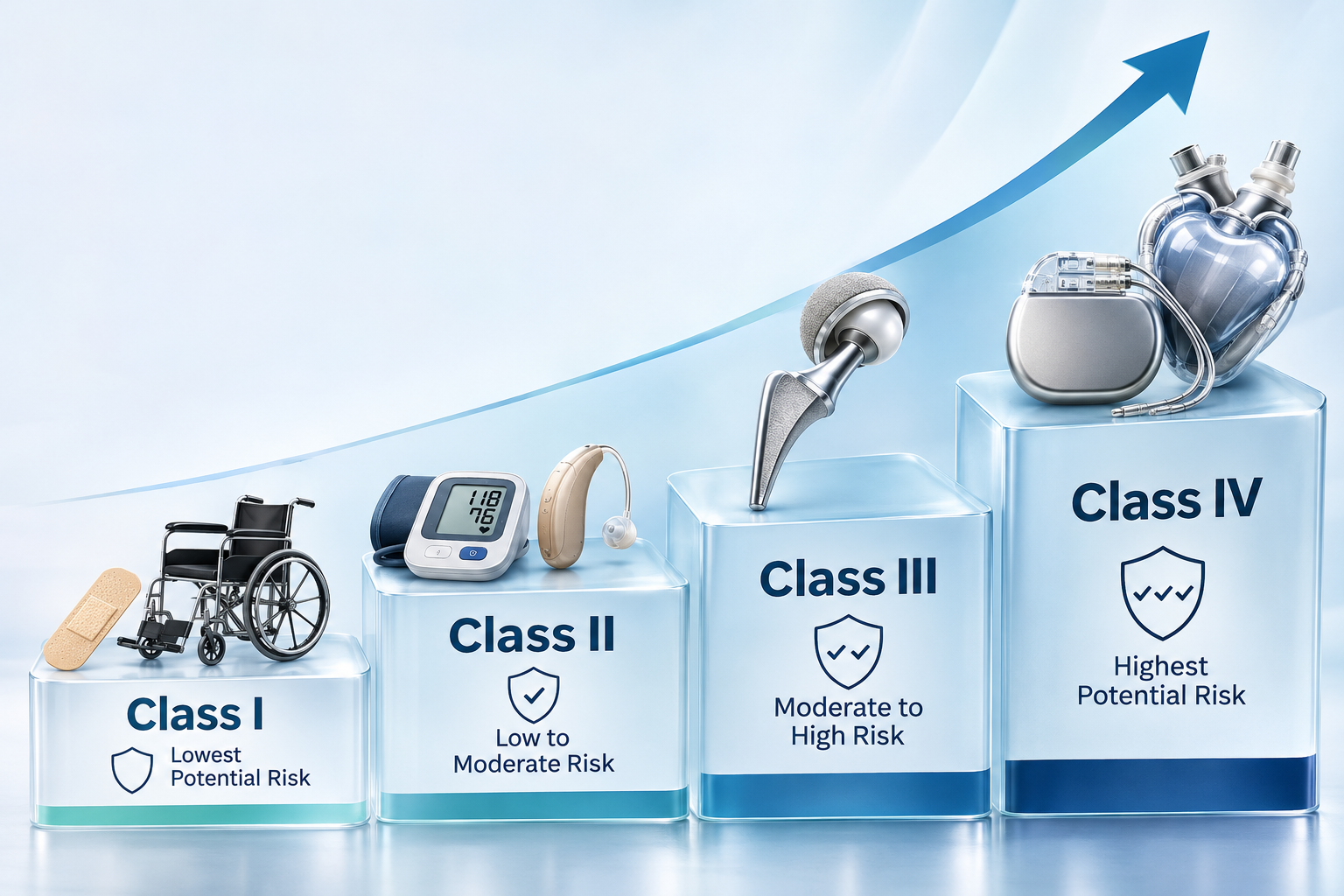
Medical device classifications from Class I to Class IV, illustrating increasing levels of potential risk and examples of medical equipment.
Understanding Risk, Regulation and What to Look for Before Buying Medical Equipment
When purchasing medical equipment, understanding what you are buying goes beyond comparing prices, features and specifications. One of the most important factors to consider is the medical device's regulatory classification.
In Canada, Health Canada classifies medical devices into four categories: Class I, Class II, Class III and Class IV. These classifications are based on the potential risk a device presents to patients and users.
But what do these classifications actually mean for someone purchasing medical equipment?
Whether you are equipping a healthcare facility, managing a medical practice, purchasing diagnostic equipment or sourcing specialized medical technology, understanding device classifications can help you make informed purchasing decisions, verify regulatory requirements and select equipment appropriate for your needs.
Let's break down what each classification means.
1. What Are Medical Device Classes?
Health Canada's medical device classification system is designed to establish regulatory requirements based on the potential risks associated with a medical device.
The four classes range from Class I, representing the lowest potential risk, to Class IV, representing the highest.
Generally, the higher the classification, the greater the regulatory scrutiny and evidence required before a device can be marketed in Canada.
Here is a quick overview:
Class I: Lowest potential risk
Class II: Low to moderate potential risk
Class III: Moderate to high potential risk
Class IV: Highest potential risk
Importantly, classification is not a rating of product quality, performance or price. A higher classification does not automatically mean a device is better. It means its intended use and potential consequences of failure warrant a higher level of regulatory oversight.
2. Understanding Each Medical Device Classification
Class I Medical Devices – Lowest Potential Risk
Class I devices represent the lowest-risk category of medical devices.
These products are generally associated with less invasive applications and lower potential consequences if something goes wrong.
Examples include:
Bandages and adhesive dressings
Manual wheelchairs
Crutches and canes
Manual toothbrushes
What does this mean for your purchase?
Although Class I devices do not require an individual Medical Device Licence (MDL) from Health Canada, this does not mean they are unregulated.
Businesses importing or distributing Class I medical devices generally require a Medical Device Establishment Licence (MDEL), subject to applicable exemptions.
When purchasing, consider:
Product quality and manufacturing standards.
Supplier credibility and traceability.
Intended use and product specifications.
Warranty, availability and replacement requirements.
A lower-risk classification does not eliminate the importance of choosing a reliable supplier.
Class II Medical Devices – Low to Moderate Potential Risk
Class II devices involve a greater level of potential risk than Class I devices and are subject to additional regulatory requirements.
These devices may involve more complex technology, monitoring capabilities or interactions with patients.
Examples include:
Powered toothbrushes
Hearing aids
Certain diagnostic and monitoring equipment
What does this mean for your purchase?
Class II medical devices must have a valid Medical Device Licence (MDL) issued by Health Canada before they can be sold in Canada, unless an applicable authorization or exemption applies.
Before purchasing, verify:
The device has an active Health Canada licence.
The manufacturer and product information match the licence.
The equipment meets your clinical or operational requirements.
Training, maintenance and technical support are available where needed.
For healthcare providers, confirming regulatory authorization is an important part of responsible procurement.
Class III Medical Devices – Moderate to High Potential Risk
Class III devices are associated with higher potential risks and often involve more complex medical applications.
These products may be implanted in the body, used in critical medical procedures or have more significant consequences if they malfunction.
Examples include:
Hip implants
Shoulder prostheses
Certain implantable medical devices
What does this mean for your purchase?
Class III devices require a valid Health Canada Medical Device Licence.
Their licensing applications are subject to more extensive regulatory scrutiny, including evidence supporting safety and clinical effectiveness.
When evaluating a Class III device, consider:
Regulatory approval and licence status.
Clinical evidence supporting its intended use.
Manufacturer reputation and product history.
Compatibility with existing medical equipment and procedures.
Availability of maintenance, technical support and replacement components.
Product traceability and recall procedures.
For healthcare facilities, purchasing decisions should consider both the immediate clinical requirements and the long-term responsibilities associated with the device.
Class IV Medical Devices – Highest Potential Risk
Class IV devices represent the highest-risk category under Canada's medical device classification system.
These devices are generally used in critical medical applications where a malfunction could have serious consequences for a patient's health or life.
Examples include:
Pacemakers
Artificial hearts
Certain high-risk implantable medical technologies
What does this mean for your purchase?
Class IV devices are subject to the highest level of regulatory scrutiny among the four classes.
Manufacturers must obtain a valid Health Canada Medical Device Licence before the device can be sold in Canada, subject to applicable regulatory provisions.
Clinical evidence and comprehensive safety information are particularly important in the licensing process.
For purchasers, additional considerations include:
Verification of the active Health Canada licence.
Clinical suitability and intended patient population.
Manufacturer documentation and clinical support.
Installation, calibration and maintenance requirements.
Staff training and technical expertise.
Ongoing monitoring, servicing and product lifecycle management.
For these devices, purchasing decisions should involve the appropriate clinical, technical and procurement professionals.
3. What Is the Difference Between an MDL and an MDEL?
One of the most important things to understand when purchasing medical equipment in Canada is the difference between a Medical Device Licence (MDL) and a Medical Device Establishment Licence (MDEL).
Although the terms sound similar, they serve different purposes.
Medical Device Licence (MDL)
An MDL is issued to the manufacturer for an individual Class II, III or IV medical device. It confirms that the device has met the applicable Health Canada licensing requirements.
Medical Device Establishment Licence (MDEL)
An MDEL applies to eligible businesses involved in importing or distributing medical devices in Canada, across all four classes. It also applies to manufacturers of Class I devices, subject to applicable exemptions.
In simple terms:
The MDL relates to the medical device.
The MDEL relates to the establishment conducting regulated activities involving medical devices.
Both are important when assessing regulatory compliance within the medical device supply chain.
4. What Should You Check Before Purchasing Medical Equipment?
Understanding the classification is only the first step. A responsible purchasing decision should also consider the equipment's regulatory status, intended use, supplier and long-term operating requirements.
Here are six important considerations before placing an order.
1. Verify the Health Canada Licence
For Class II, III and IV devices, check that the product has an active Medical Device Licence.
Health Canada's Medical Devices Active Licence Listing (MDALL) allows purchasers to search for licensed medical devices.
Make sure the manufacturer, device name and device identifier match the product you intend to purchase.
2. Confirm Your Supplier's Credentials
Ask whether the supplier holds the appropriate Medical Device Establishment Licence (MDEL) for its regulated activities.
A licensed device and a properly authorized supplier are two separate considerations.
3. Understand the Intended Use
Not every medical device suits every clinical environment.
Review the manufacturer's intended use, specifications, indications and operating requirements before making a decision.
4. Consider Maintenance and Technical Support
Medical equipment is a long-term investment.
Before purchasing, understand:
Warranty coverage.
Preventive maintenance requirements.
Calibration and servicing.
Availability of replacement parts.
Technical support and repair turnaround times.
5. Review Training and Installation Requirements
Some equipment requires specialized installation, calibration or operator training.
Confirm whether these services are included in the purchase or require additional arrangements.
6. Evaluate Total Cost of Ownership
The purchase price is only one part of the investment.
Consider ongoing expenses such as consumables, maintenance, software, replacement components, servicing and staff training.
A device with a lower upfront price may have higher operating costs over its lifetime.
5. Why Medical Device Classification Matters to Your Purchasing Decision
Medical device classification is more than a regulatory requirement. It provides an important starting point for evaluating the level of oversight associated with the equipment you are considering.
For healthcare facilities and medical professionals, understanding the classification can help:
Support regulatory compliance.
Reduce the risk of purchasing unauthorized equipment.
Improve procurement and supplier evaluation.
Identify appropriate documentation requirements.
Support patient safety and clinical suitability.
Make better-informed long-term purchasing decisions.
Ultimately, the goal is not simply to purchase medical equipment. It is to invest in equipment that meets your operational needs, aligns with its intended clinical application and satisfies applicable Canadian regulatory requirements.
6. Making the Right Medical Equipment Purchase
Choosing medical equipment requires balancing clinical requirements, regulatory compliance, quality, reliability and budget.
Understanding the difference between Class I, II, III and IV devices gives you a stronger foundation for evaluating products and asking the right questions before committing to a purchase.
Whether you are sourcing everyday medical supplies or specialized medical technology, taking the time to verify the device, its licensing status and the supplier can make a meaningful difference.
At Medical Solutions, informed purchasing starts with informed decisions.
Explore our medical equipment and solutions or connect with our team to discuss your equipment requirements.
Official Canadian regulatory references
Disclaimer: This article is intended for general educational and informational purposes only. Medical device classifications and licensing requirements depend on the device's intended use and applicable Canadian regulations. Always verify the current regulatory status of a product with Health Canada and consult the manufacturer or an appropriate regulatory professional when necessary.